


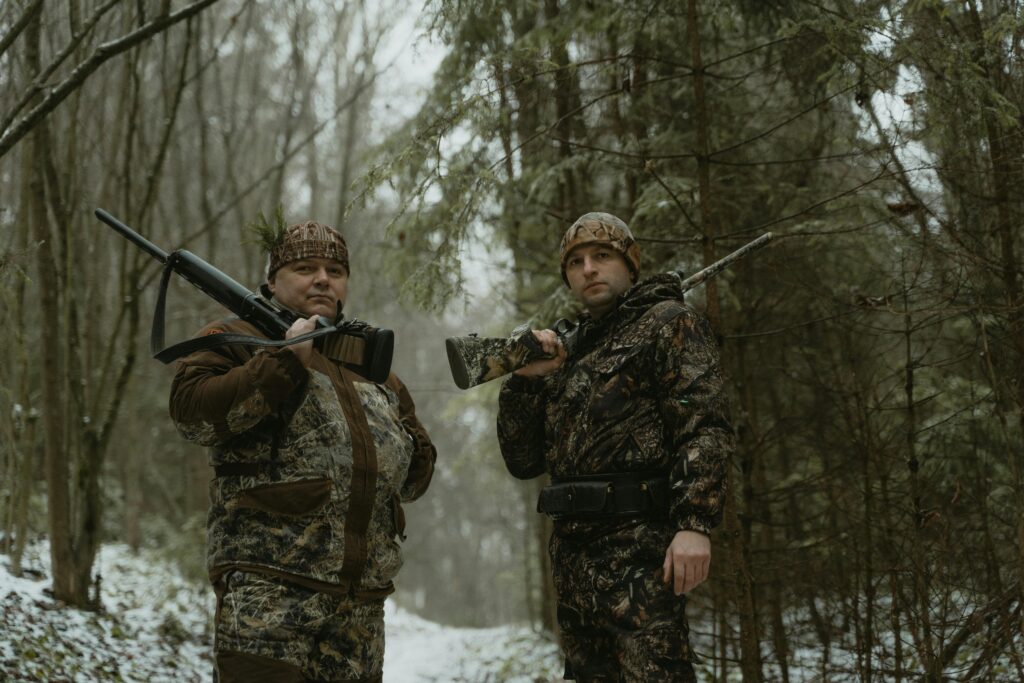
A lot of hunters have gotten used to a frustrating reality over the years: even when hunting was technically allowed on federal land, that didn’t always mean access was simple, sensible, or consistent.
Instead, sportsmen often had to navigate a patchwork of extra local restrictions layered on top of existing state and federal law. And those added rules were not always the difference between safe hunting and unsafe hunting. In many cases, they just made things more confusing, more limited, and more hostile to the people who were trying to use public land lawfully.
That may finally be changing.
Recent action from the Department of the Interior is stripping back a number of hunting and trapping restrictions across dozens of federal land units. The core idea is pretty straightforward: if hunting is already legally authorized in a given area, then local restrictions should be minimal unless they are genuinely necessary for safety or resource protection.
That should not be a controversial idea.
Hunters are already expected to follow the law. They are already responsible for knowing seasons, methods, boundaries, and safety rules. So when government agencies pile on extra location-specific restrictions that vary from one place to the next, the result is often less clarity, not more. And when rules become harder to track, the burden falls hardest on the very people trying to do things the right way.
That is one reason this rollback matters.
It is not really about opening brand-new places that were totally closed to hunting before. It is about reducing the maze of duplicative rules that have made public-land hunting harder than it needs to be. That includes removing certain park-level restrictions that went beyond what many hunters would reasonably expect, even when they were otherwise acting lawfully. For gun owners and hunters alike, this points to a larger issue.
Too often, the default posture of government is not to trust responsible citizens with freedom. It is to wrap that freedom in layers of administrative caution until using it becomes frustrating, legally risky, or just plain impractical. The right may still exist on paper, but in real life it gets chipped away by process.
That is what makes this development worth paying attention to.
Public land should actually be usable by the public. And lawful hunting should not be treated like some embarrassing exception that agencies tolerate only after surrounding it with unnecessary red tape. Hunting is not a threat to the public good. For millions of Americans, it is part of self-reliance, conservation, family tradition, food gathering, and responsible outdoor culture.
That deserves respect.
Now, to be clear, nobody is arguing that every restriction is automatically bad. Real safety concerns matter. Real conservation needs matter. And if a specific area truly requires tighter rules, that case should be made clearly and honestly.
But that is exactly the point.
Restrictions should exist because they are necessary, not because bureaucracy has a habit of multiplying. Hunters should not have to prove they deserve access to land that already belongs to the public while unelected rulemakers keep moving the goalposts.
If this rollback leads to more consistency, more access, and less pointless friction, then yes, that is a big win. And it is the kind of win hunters deserve a lot more of.