


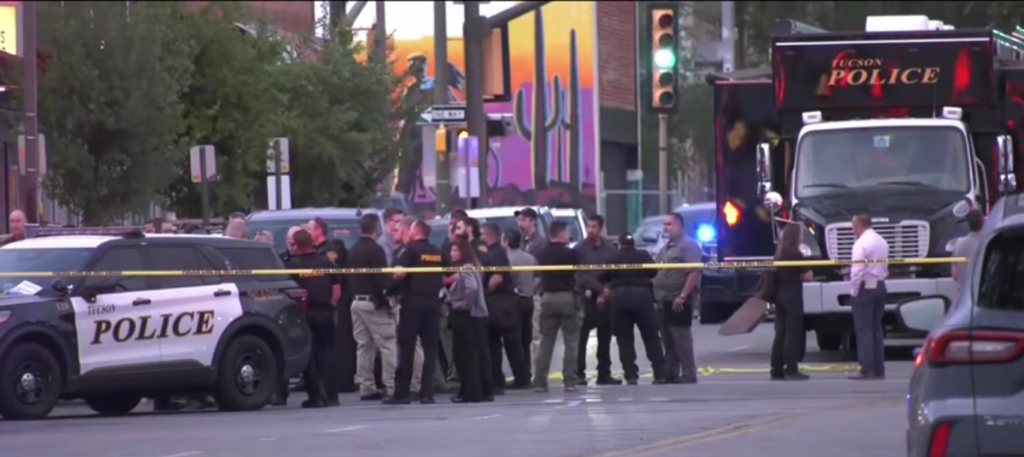
Tucson was the scene of a mass shooting recently. Unfortunately, we still see these in cities here in the U.S. (that could be a bonus third lesson from this shooting: Consider not living in a city since mass shootings concentrate in those areas).
Now, the point of going over this mass shooting today isn’t to glorify this horrible act or to give fame to the shooter or the alleged shooter (if it turns out to be different people).
The point is to go back to a principle that I first heard from self-protection teacher, Tim Larkin: Sometimes the best information on how to protect yourself comes from the worst people.
In other words, if you want to know how criminals think and act, it can be useful to study their thinking and actions so that you know how to avoid those actions and counteract them. (You can find more information from Larkin here and here.)
With that in mind, here is the first thing to note about this incident. Steve Corman writes,
Nine other people were wounded, apparently before police arrived on the scene, and they were taken to hospitals in critical condition, many of them with gunshots to their extremities, Magos said. All the victims were adults, and no police officers were injured, he said.
Did you catch it? All of the injuries, except for the injury of the alleged shooter, happened before police arrived.
Now, I’m not clear if the shooting was stopped by law enforcement engaging the alleged shooter or if the shooter had stopped their rampage before police arrived.
Either answer doesn’t change the point, which is this: Police can’t prevent a shooting if they aren’t already on site, and they can’t physically be on site everywhere.
That means that the best way to stop a shooter (because it’s simply not possible to prevent all shootings as many shooters don’t show signs of criminal intent beforehand) is to be carrying your firearm on your person wherever you are.
You don’t hope to be present when a shooter commits their crime, but you want to be able to intervene to save lives (maybe especially your own) if you are put into that position.
That’s the first point: Remember your ABCs: Always Be Carrying.
The second point? Read this, and see if you can spot it:
The shooting grew out of a confrontation between two groups of people known to each other, and bystanders were struck by gunfire, local television station KGUN-TV, an ABC affiliate, reported, citing police sources.
I can’t say for sure, but that sounds suspiciously like gang activity or, at the very least, volatile people involved.
So, the second point is: As much as possible, stay away from people who you can tell have the potential to be dangerous in a volatile way (you want to be dangerous, too, in order to protect people, but you don’t want to be volatile, as in being the initiator of violence).
The best way to prevent being the victim of gun violence is to simply not be there when it happens.
It’s tragic that this situation happened. Absolutely horrible. But there are lessons that can be learned from it, and we should take that information and make use of it to protect ourselves and those that we love.