










The idea of a safety on a firearm, for many people, conjures up ideas of making the firearm less dangerous, and, to be fair, the whole point of a safety on a firearm is to keep the firearm from having a negligent discharge (hopefully for any reason).
Safety is the reason, after all, that so many daily carry pistols have mechanical trigger safeties, grip safeties, or internal components for the purpose of preventing the firearm from discharging for any reason other than an intentional pulling of the trigger.
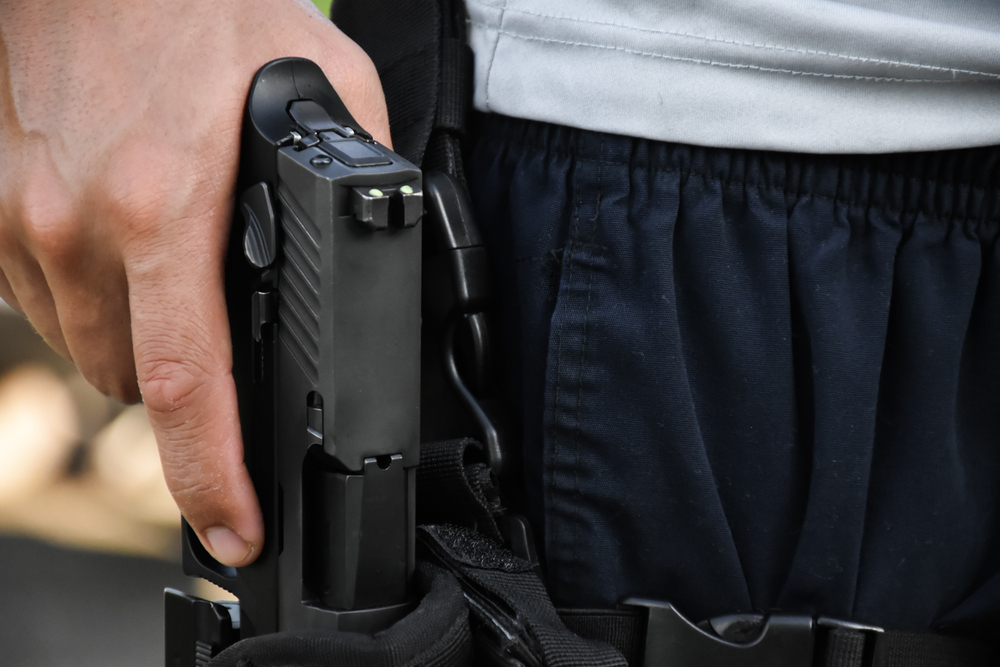
So, many people take that idea one step further and choose to have firearms with manual safeties that have to be intentionally disengaged in order to fire the pistol.
Of course, the controversy around this is huge.
Many people take the side of always carrying with a manual safety and include, as part of their training, to disengage the safety as part of their drawstroke. If you go with this line of thinking, you want to be sure that the habit of disengaging the manual safety when you draw your firearm is so deeply ingrained in your muscle memory that you don’t have to think about it. You just do it as part of pulling out your pistol for the self defense situation.
Other people fall definitely on the side of not having a manual safety on their everyday carry pistol. Why? For simplicity and speed to first shot if, God forbid, you have to pull your firearm on someone in self-defense. Sometimes getting the first shot in a fraction of a second faster can save a life.
But, really, what is the best choice to go with for your daily carry firearm? That’s exactly what Massad Ayoob sets out to answer in the video below.
Did you watch the video?
I will admit that I’ve tended to fall on the side of carrying without a manual safety, and with my preference to being the grey man when it comes to concealed carry (meaning that I don’t want anyone to know that I’m carrying unless I have to pull it out to save a life), it’s pretty unlikely that anyone would know that I’m carrying, so they would be very unlikely to be able to take the gun from me to use it against me.
But Ayoob’s story about having a manual safety saving the lives of LEOs by preventing an aggressor from being able to make use of the firearm if they’re able to take it from you has me reconsidering whether I should change to carrying with a manual safety and training hard to make disengaging that safety part of my drawstroke.
What are your thoughts on this: Manual safety or no manual safety? Tell us below.
As always, the best way to practice your skills (including practicing including disengaging your manual safety as part of your drawstroke) is with dryfire. That’s why we’re giving away a FREE 30 day dryfire program that only takes 10-minutes per day here for you: http://freedryfire.com/YT





I personally don’t like a manual safety on a concealed carry handgun.
The draw, point, shoot is the why that I feel is the best way to handle a shooting situation.
I personally have/would not even show/draw a handgun unless I feel my life is in eminent jepordy.
I don’t make threats and I don’t draw my gun unless I’ve made the dession to shoot.
The other guy won’t even know that I’m armed so it’s unlikely we’ll be rolling around on the ground fighting for control of the gun. This is the only real value of having an on/off switch.
I don’t think it’s worth it.
Back in the da
I personally like to have a safety on my concealed carry gun (Smith & Wesson Shield). I often carry it in a pocket holster, and with the safety, I don’t have to worry about the trigger catching on my pants pocket when I draw my gun. I practice removing the safety in my draw.
I have handguns both with, and without manual safeties. Which I carry depends on circumstances. I carried a 1911 for 20 years in the military. I’m now 70 years old. What I’ve learned is that situational awareness is more important than any gun characteristic, including caliber. Training / drilling is next. Every firearm I own (at least one for every purpose) I’ve trained with to the point that operation under any situation is as automatic as I can make it. I don’t have to stop and think about it, just like I don’t have to stop and think about how to tie my shoelaces. The VA calls it PTSD, and I’m fine with that 🙂
Comments are closed.